Starting a growing business in the UK comes with its own set of challenges, and one of the biggest hurdles is VAT compliance. Many businesses unknowingly fall into VAT compliance traps that can lead to costly mistakes. This blog aims to help growing UK businesses identify and avoid VAT compliance risks by understanding the concept of VAT risk mapping and the most common VAT issues that businesses face.
Understanding VAT Risk Mapping for Growing UK Businesses
What is VAT Risk Mapping?
VAT risk mapping is the process of identifying and mitigating potential risks related to VAT compliance. This includes understanding the VAT registration threshold, correctly applying VAT rates, and maintaining accurate VAT records. As businesses grow, their turnover increases, which often leads them into complex VAT territory, making it essential for them to understand their VAT obligations.
Why is VAT Risk Mapping Important?
For small businesses, especially those expanding, VAT compliance is critical to ensure smooth operations. Without proper VAT risk mapping, businesses risk missing VAT registration requirements, misapplying VAT rates, or failing to meet other VAT obligations, all of which can lead to penalties and interest charges.
Common VAT Compliance Traps for Growing UK Businesses
Misunderstanding VAT Thresholds
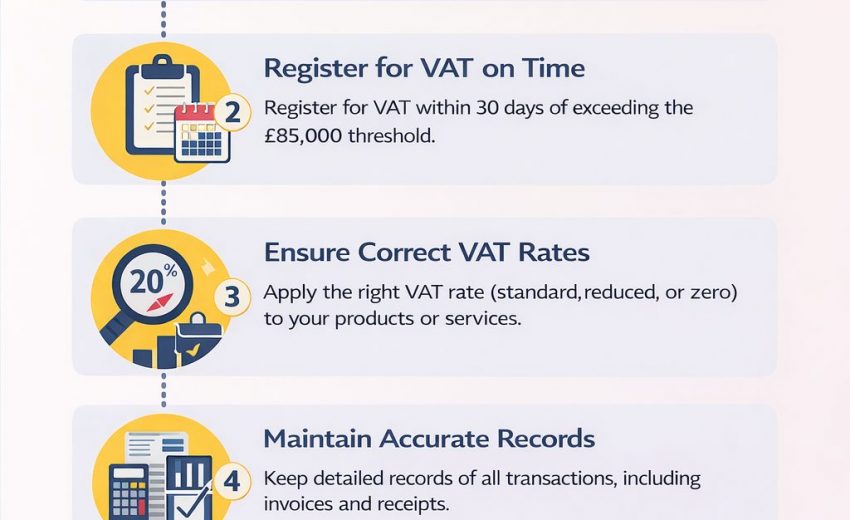
One of the most common mistakes businesses make is not properly understanding the VAT registration threshold. In the UK, businesses with an annual taxable turnover exceeding £85,000 are required to register for VAT. However, many businesses either fail to monitor their turnover or misunderstand the requirements, leading to missed deadlines and penalties.
Incorrect VAT Rate Application
Another common pitfall is applying the wrong VAT rate to goods or services. The UK has different VAT rates depending on the product or service. For example, most goods and services are charged at the standard VAT rate of 20%, but certain items like food and children’s clothing are exempt or charged at a reduced rate. Misapplying VAT rates can lead to errors in tax returns and fines from HMRC.
Failing to Register for VAT on Time
If a business exceeds the VAT registration threshold, it must register for VAT within 30 days. Failure to do so can result in penalties and fines. Many businesses miss this critical deadline because they don’t track their turnover closely enough or fail to act in time.
Poor Record Keeping
Maintaining accurate and up-to-date VAT records is essential for compliance. Failure to keep proper records, including invoices and receipts, can cause issues when it comes time to file VAT returns. Inaccurate records can lead to discrepancies, which can trigger audits and penalties.
How to Avoid VAT Compliance Risks
Regularly Review VAT Thresholds and Registration
The first step to avoiding VAT compliance risks is to regularly review your business’s turnover and ensure you register for VAT if your business exceeds the VAT threshold. If your business is approaching the threshold, make sure to register early to avoid last-minute complications.
Work with VAT Advisory Services
Working with VAT experts can help you navigate the complex world of VAT compliance. VAT advisory services, like those offered by Maze Accountant, can ensure you’re applying the correct VAT rates, filing on time, and keeping accurate records. These services can also provide guidance on how to structure your business’s VAT strategy to avoid common pitfalls.
Maintain Accurate Records
Maintaining clear and accurate VAT records is essential for compliance. This includes keeping track of all invoices, receipts, and VAT-related documents. Using accounting software or cloud-based VAT solutions can make this process more manageable and help you stay on top of your VAT obligations.
The Role of VAT Advisory Services
Expert Guidance on VAT Management
As VAT laws and regulations change, it’s essential for growing businesses to stay up to date. VAT advisory services help businesses understand the nuances of VAT rules and ensure compliance. By working with experts, businesses can avoid the risks associated with VAT non-compliance and minimize the chances of costly errors.
Frequently Asked Questions about VAT Compliance
What is the VAT threshold in the UK?
In the UK, businesses must register for VAT if their taxable turnover exceeds £85,000 over a 12-month period. This threshold is subject to change, so businesses must stay informed about any updates to the registration requirement.
Why is it important to keep accurate VAT records?
Accurate VAT records are essential for several reasons. They help ensure that your VAT returns are filed correctly, make it easier to prove compliance during a tax audit, and ensure that you can claim back VAT where applicable.
When should a business register for VAT?
A business must register for VAT if its taxable turnover exceeds the £85,000 threshold. It’s essential to monitor your turnover and register on time to avoid penalties.
Conclusion
Ensure Your Business Stays VAT-Compliant with Maze Accountant
In conclusion, VAT compliance is a crucial aspect of running a growing business in the UK. By understanding the potential VAT risks, regularly reviewing your business’s financial status, and working with VAT experts, you can avoid costly mistakes. Maze Accountant offers expert VAT advisory services to help businesses stay compliant with all VAT regulations. Contact us today to ensure your business remains on the right side of VAT compliance.